
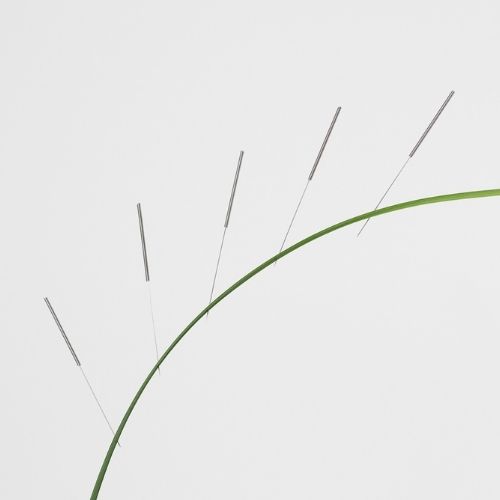









Here is the part almost nobody explains: in Chinese medicine acupuncture, the needles are the last step, not the first. Two people can walk into the same clinic on the same afternoon with what looks like the same headache, and walk out with two completely different point prescriptions. Nothing went wrong. The diagnosis simply differed, and in this system the diagnosis is what determines everything that follows.
That distinction is the whole difference between care built around a pattern and care built around a symptom. If you want the historical background on the medicine itself, the explainer on what is Traditional Chinese Medicine covers it. This article covers something more practical: what a practitioner is actually looking for, and how that changes the treatment on your table.
Why the Point Prescription Comes Last in Chinese Medicine Acupuncture?

A symptom tells you where discomfort shows up. It does not tell you why. Chinese medicine acupuncture treats the why, which means the practitioner has to identify a pattern first: how your body is producing that headache, at what time of day, alongside what else, and under what conditions it improves or worsens.
Only once that pattern is clear does point selection happen. This is why two people with an identical complaint receive different needles, different depths, different retention times, and often different supporting therapies. The intake is not paperwork. It is the treatment plan being written in front of you.
What a Chinese Medicine Acupuncture Practitioner Is Actually Assessing?

The intake at a Traditional Chinese Medicine practice draws on several channels of information at once, and none of them mean much in isolation.
1. The Pulse
Your pulse is taken at both wrists, usually at three positions per side, and the practitioner is not counting beats. They are assessing quality: whether it feels thin or full, fast or slow, tight like a wire, or slippery. A pulse that feels wiry on the left and weak on the right points somewhere very different than one that feels rapid and thin throughout.
2. The Tongue
The tongue is the one internal organ you can see without equipment. Color, coating, moisture, swelling, cracks, and the shape of the edges all carry diagnostic weight in Chinese medicine acupuncture, and the tongue tends to change more slowly than the pulse, which makes it useful for tracking longer arcs of progress.
3. Sleep, Digestion, and Temperature
You will be asked when you fall asleep, when you wake, whether you dream heavily, how your appetite behaves, whether you bloat after meals, whether you run hot or cold, and whether you sweat easily. These answers are not small talk. They are the questions that separate one pattern from another when the headline symptom is identical.
Two Patients, One Headache, Two Different Treatments
The following are fictional composites created to illustrate the reasoning, not real patients.
1. Maya, 34: Headaches That Arrive With Deadlines
Maya’s headaches sit at her temples, worsen under work pressure, and come with tight shoulders, irritability, and a tendency to lie awake replaying conversations. Her digestion is fine. Her pulse feels tight. Her tongue has red edges. The pattern here is one of constraint and heat rising upward, so the treatment moves things downward and outward: distal points on the hands and feet, minimal needling at the head itself, and shorter retention. If tension is her driver, the approach used for Chinese medicine for anxiety overlaps considerably with what her sessions look like.
2. Robert, 51: Headaches That Arrive With Exhaustion
Robert’s headaches are dull rather than sharp, sit across the forehead, and appear late in the afternoon or after skipping lunch. He bloats easily, feels heavy limbed, and sleeps deeply but wakes unrefreshed. His pulse is weak and slippery. His tongue is pale with a thick coating. This is a pattern of depletion with dampness, not constraint. The Chinese medicine acupuncture approach is close to the opposite of Maya’s: fewer, gentler needles, longer retention, points that support digestion and build reserves, and warmth applied rather than heat cleared.
3. Why the Two Chinese Medicine Acupuncture Prescriptions Diverge
Same complaint, opposite mechanisms. Treating Robert with Maya’s protocol would push down a system that already lacks reserves. Treating Maya with Robert’s would add warmth to a picture that already has too much. This is the practical argument for a long intake, and it is the reason Chinese medicine acupuncture resists one size fits all protocols.
How Herbs, Cupping, and Moxibustion Fit the Same Diagnosis?
Once the pattern is identified, the other tools available at Sage Wellness are selected by that same logic rather than added as extras.
1. Herbal Medicine
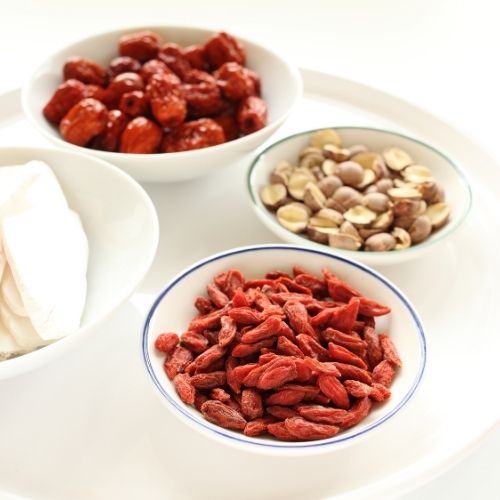
A prescribed formula works between sessions, which matters for patterns that need daily support rather than weekly. Formulas are matched to the pattern and adjusted as it shifts, and they should only ever be taken under the supervision of a licensed practitioner who knows your medications and health history.
2. Cupping
Cupping uses gentle suction to encourage circulation and ease muscular tension, which suits a presentation like Maya’s, where tightness through the neck and shoulders is feeding the headache.
3. Moxibustion
Moxibustion applies gentle warmth at selected points. It fits patterns like Robert’s, where the picture is one of cold and depletion, and it would generally be avoided where signs of heat dominate.
Your Diagnosis Is Not Fixed
The pattern that explains your symptoms in week one often is not the pattern in week six. As sleep improves or digestion settles, the pulse and tongue change with it, and the point prescription changes too. This is why practitioners reassess at the start of every visit rather than repeating the previous session, and why progress in the benefits of acupuncture tends to compound across a course of care rather than arriving all at once.
It is also worth being direct about evidence. Chinese medicine acupuncture supports the body and helps manage symptoms alongside conventional care. Evidence is strongest for chronic pain conditions such as low back pain, knee osteoarthritis, and migraine frequency, and for nausea. For sleep, mood, energy, and digestive complaints, many patients report real improvement while the research base remains smaller. Persistent or sudden headaches always warrant medical evaluation first.
What This Means for Your First Appointment?
Expect your first Chinese medicine acupuncture visit to be mostly conversation, and expect questions that seem unrelated to why you came. Bring a list of your medications and supplements, note when your symptoms are worst, and resist the urge to edit out details that feel irrelevant. The apparently minor ones frequently decide the pattern.
Booking Chinese Medicine Acupuncture in the Financial District
If you have tried needling before and found it generic, the missing piece was probably the diagnosis rather than the technique. Chinese medicine acupuncture at Sage Wellness begins with a full intake, a pattern, and a plan built around it, and the practice offers a complimentary fifteen minute phone consultation before you commit to anything. Book a session and find out which pattern is actually driving your symptoms.