
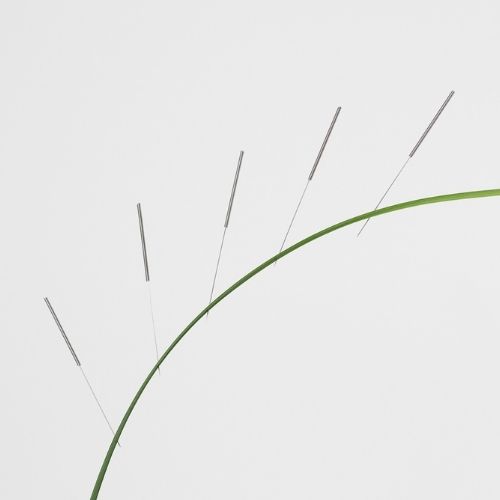










Does it hurt? For almost everyone, no. Acupuncture needles are roughly the width of a human hair and nothing like the hollow needles used for injections or blood draws. Most people feel a light tap and then nothing at all. An acupuncture treatment feels far closer to a nap than to a medical procedure, and a good number of patients fall asleep on the table.
You have probably already read ten pages explaining that acupuncture balances Qi. That may be true, but it does not tell you what the room looks like, how long the needles stay in, what the sensation is called, or how a practitioner decides where to place them. This walkthrough covers all of it, following the same three step process patients move through at Sage Wellness in the Financial District: your first visit, your treatment plan, and ongoing maintenance.
Where Your Acupuncture Treatment Actually Happens?

An acupuncture treatment happens in a space closer to a quiet massage studio than a clinical exam room. There is a padded table with a face cradle, warm lighting that gets dimmed once you are settled, a blanket within reach, and usually soft music or a white noise machine running in the background. Needles arrive in sealed, single use, sterile packets that are opened in front of you and dropped into a sharps container the moment they come out. Nothing is ever reused.
You rarely need to fully undress. Most commonly used points sit below the elbows and knees, on the abdomen, or along the back, so loose clothing that rolls up easily is ideal. If points along your spine are needed, you are draped the way you would be for a massage.
Your First Visit: The Conversation Before the Needles
The first appointment runs longer than the ones that follow, and most of it is spent talking. Understanding the pattern sitting underneath your symptoms is exactly what makes the rest of your acupuncture treatment specific to you rather than generic.
1. The Intake Interview
Expect questions that feel unrelated to why you came in. Sleep quality, digestion, appetite, temperature preferences, energy dips at particular hours of the day, stress load, headaches, menstrual history. A practitioner trained in traditional Chinese medicine in NYC reads all of that together as one pattern rather than as a checklist of separate complaints.
2. Tongue and Pulse Reading
You will be asked to stick out your tongue, and the practitioner will take your pulse at both wrists, typically at three positions on each side. These two diagnostics take under two minutes combined, and they directly shape which points are chosen for you that day.
3. How the Points for Your Acupuncture Treatment Are Selected
Point selection combines your underlying pattern, your primary complaint, and how you present on the day. A typical session uses somewhere between six and twenty needles. That number is not a measure of how serious your condition is, and more needles does not mean a stronger acupuncture treatment.
Your Session, Minute by Minute

1. Settling In, Minutes 0 to 10
You get onto the table, the practitioner confirms how you have felt since your last visit, checks anything that has changed, and dims the lights.
2. Insertion, the Part of an Acupuncture Treatment People Fear
Each needle is tapped through a thin guide tube in a fraction of a second. Points on fleshy areas such as the abdomen or upper back are usually completely unremarkable. Points on the hands, feet, and ankles can produce a brief pinch that fades within a couple of seconds. This whole stage is over in about five minutes.
3. Retention, Minutes 15 to 40
This is the longest and quietest stretch of an acupuncture treatment. Needles generally stay in place for twenty to thirty minutes while you simply rest. The practitioner may step back in once or twice to gently adjust a needle, apply warmth with moxibustion, or check that you are comfortable.
4. Removal and Aftercare, Minutes 40 to 50
Removal is faster than insertion and almost always painless. You sit up slowly and take a minute before standing. Mild lightheadedness or a pleasantly heavy, sedated feeling is normal and passes quickly. Small bruises occasionally appear at a point and fade on their own within a few days.
The Sensation Has a Name: De Qi
What patients describe as heaviness, warmth, a dull ache, or a spreading tingle around a needle has a specific name in acupuncture: de qi. It is considered a therapeutic sensation rather than a warning sign, and practitioners will often rotate a needle slightly to bring it on.
Sharp, electric, or escalating pain is a different matter entirely. Say something immediately and the needle is repositioned or removed. Nothing about an acupuncture treatment requires you to lie there tolerating pain quietly, and telling your practitioner what you feel makes the session work better.
Your Treatment Plan: Why One Session Is Rarely Enough
After the first visit you receive a plan rather than a standalone appointment. Recent, acute issues often respond within a handful of sessions. Longstanding concerns are typically scheduled weekly for six to eight weeks and then reassessed, with the interval stretching out as things improve. Herbal medicine, dietary guidance, or health coaching may run alongside the needling when appropriate. Reading about the benefits of acupuncture is a useful starting point, but the plan is where those benefits actually get built, through frequency and consistency rather than a single visit.
What an Acupuncture Treatment Supports, and How Strong the Evidence Is?
Honest framing matters here. Acupuncture supports the body and helps manage symptoms. It does not cure disease, and it works best alongside conventional medical care rather than instead of it.
1. Pain, Where the Evidence Is Strongest
NCCIH describes moderate quality evidence for chronic low back pain, and the American College of Physicians includes acupuncture among the nondrug options recommended as first line treatment for it. Evidence also supports reduced knee pain in osteoarthritis and reduced migraine frequency.
2. Nausea, Also Well Supported
Cochrane reviews of stimulation at the P6 point on the inner wrist found reduced postoperative nausea and vomiting across dozens of trials involving thousands of patients, with effects broadly comparable to antiemetic medication and side effects that were minor and short lived.
3. Where the Evidence Is Still Emerging
Sleep, stress, mood, digestive complaints, menstrual irregularity, and low energy are among the most common reasons people book, and many patients report meaningful improvement. The research base here is smaller and less consistent than it is for pain and nausea. If you are exploring acupuncture for energy and fatigue, treat it as supportive care and keep your physician in the loop, since persistent fatigue always deserves a medical evaluation.
Maintenance: What Happens Once You Feel Better
Once your symptoms stabilize, visits usually stretch to once every three to six weeks. Maintenance sessions exist to catch small imbalances before they build back into the thing that brought you in, and they are also where dietary and lifestyle guidance tends to get refined.
How to Prepare for Your First Acupuncture Treatment?
Eat something light before your acupuncture treatment rather than arriving on an empty stomach. Skip heavy caffeine in the hour before your appointment, wear loose clothing, and give yourself a calm twenty minutes afterward instead of racing straight into a meeting. Tell your practitioner about any medication, supplement, or blood thinner you take, and about pregnancy, since certain points are avoided.
Booking Your Acupuncture Treatment in the Financial District
If the needle question was the thing holding you back, you now have the honest answer: hair thin needles, a quiet room, and a session most people find deeply restful. Care at Sage Wellness begins with a complimentary fifteen minute phone consultation, so you can ask everything above and more before committing to anything. Book your acupuncture treatment and find out how a session actually feels for you.