









Digestive complaints like bloating, discomfort after meals, and sluggish digestion are some of the most common reasons people look for natural support. For centuries, Chinese herbs for gut health have been used to ease these issues by restoring balance rather than simply masking symptoms. At Sage Wellness, traditional herbal formulas are used as part of a complete approach to digestive wellbeing. This guide explains how they work and which herbs are most commonly used.
Understanding Gut Health in Chinese Medicine
In Chinese Medicine, digestion sits at the center of overall health. A strong digestive system is seen as the foundation for energy, immunity, and clear thinking, which is why so much attention is placed on keeping it balanced.
The Spleen and Stomach Connection
Traditional Chinese Medicine views healthy digestion as the work of the Spleen and Stomach. Together they transform food into the energy, or qi, that the body needs to function.
When this system is strong, meals are broken down smoothly and nutrients are absorbed well. When it weakens, food is not processed properly, and symptoms begin to appear.
When Digestion Goes Out of Balance?
According to this tradition, sluggish digestion often leads to a buildup of what is called dampness, which can cause heaviness, bloating, and fatigue. Emotional stress can also disrupt the smooth flow of qi, adding to the discomfort.
This same framework is used to understand chinese herbs for stomach inflammation, where the goal is to cool irritation and support the digestive organs. In the language of gut health chinese medicine, the aim is always to treat the root cause, not only the symptom.
Common Chinese Herbs for Gut Health

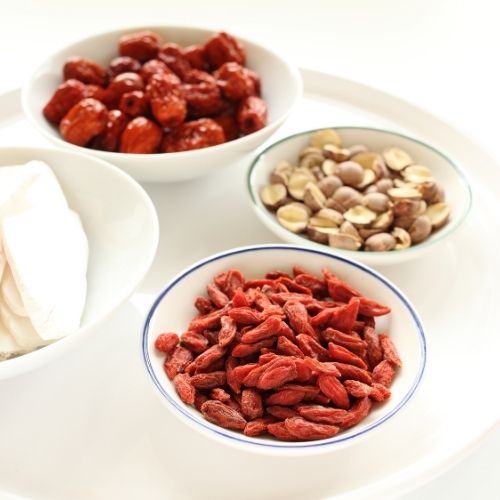
A practitioner selects herbs based on each person’s unique pattern, but several appear again and again for digestion. The most widely used Chinese herbs for gut health include:
- Ginger (Sheng Jiang): Warms the stomach, settles nausea, and supports comfortable digestion.
- Tangerine Peel (Chen Pi): Helps move qi, ease bloating, and reduce a feeling of fullness after eating.
- Hawthorn (Shan Zha): Traditionally used to break down rich, fatty, or heavy meals and relieve food stagnation.
- Poria (Fu Ling): Gently drains dampness and supports the Spleen, helping with heaviness and loose digestion.
- Magnolia Bark (Hou Po): Used to relieve bloating, distension, and a sense of blockage in the abdomen.
- Licorice Root (Gan Cao): Soothes the digestive tract and harmonizes the other herbs in a formula.
- Chinese Yam (Shan Yao): Nourishes and strengthens a weak digestive system over time.
Each herb is rarely used alone. Instead, they are combined into balanced formulas designed for the individual.
How Chinese Herbs Support Digestion and Ease Bloating?

Rather than targeting a single symptom, Chinese herbs for gut health work on several levels at once. They aim to strengthen the digestive organs, move stagnant qi, resolve dampness, and calm irritation.
This is why the idea of a chinese medicine gut cleanse is best understood as a gentle restoring of balance, not a harsh detox. The focus is on helping the body digest and eliminate more efficiently on its own.
Personalized Formulas
One of the strengths of herbal medicine is personalization. A well known formula such as Bao He Wan, for example, is often used for bloating and discomfort caused by overeating.
A trained practitioner adjusts the ingredients to match your specific pattern, lifestyle, and goals. This tailored approach is what makes the treatment both gentle and effective.
A Whole Body Approach to Wellness
Chinese herbal medicine rarely treats digestion in isolation. Because the gut is linked to energy, hormones, and mood, improving it often supports many other areas of health.
This same whole body philosophy extends to reproductive wellness. Many people use Chinese Medicine and Fertility support alongside Acupuncture for Fertility when trying to conceive, since strong digestion helps build the foundation the body needs.
Lifestyle Tips to Support Your Gut
Herbs work best when paired with supportive daily habits. A few simple changes can make a real difference:
- Favor warm, cooked meals over cold or raw foods, which are considered harder to digest.
- Eat slowly and mindfully, without rushing or distraction.
- Avoid overeating, and leave a little room at the end of each meal.
- Manage stress, since tension directly affects digestion.
These habits complement herbal treatment and help maintain results over time.
When to See a Practitioner
Chinese herbs should always be prescribed by a licensed practitioner rather than self selected. They can interact with medications, and the right formula depends on an accurate assessment of your individual pattern.
Extra care is needed during pregnancy, as some herbs are not suitable. Those seeking support during this time can explore Chinese Medicine for Pregnancy and gentle Acupuncture and Pregnancy care under professional guidance.
If digestive symptoms are severe, persistent, or worsening, it is important to see a doctor to rule out any underlying condition.
Support Your Digestion Naturally
Lasting gut health starts with restoring balance from within. To explore a personalized approach with Chinese herbs for gut health, book a consultation with Sage Wellness and take the first step toward comfortable, healthy digestion.
Frequently Asked Questions
Are Chinese herbs safe for digestion?
When prescribed by a licensed practitioner, they are generally well tolerated. Safety depends on the correct formula, the right dosage, and an assessment of your health history.
How long do Chinese herbs take to work?
Some people notice relief from bloating within a few days, while deeper improvements in digestion usually build over several weeks of consistent use.
Can I take Chinese herbs with my regular medication?
Only under professional guidance. Some herbs can interact with medications, so always share your full medical history with your practitioner.
Do I need acupuncture as well as herbs?
Not always, though the two are often combined. A practitioner may recommend both to support faster and more balanced results.
Can Chinese herbs help with long term gut issues?
They can support ongoing digestive health, especially when paired with good lifestyle habits. Chronic issues should also be reviewed by a medical doctor.