









Chinese medicine does not treat weight. It treats the pattern underneath it. That distinction sounds like semantics until you sit through a first appointment and realize the practitioner has asked about your sleep, your afternoon energy, your bowel movements, your stress load, and whether your hands run cold, without once mentioning a number on a scale.
That is the honest frame for Chinese medicine for weight loss. It is a diagnostic lens, not a program. Weight that will not shift is usually a downstream signal of something upstream: digestion that is not extracting energy efficiently, a stress response that has been switched on for years, or a hormonal picture that has drifted. The work is on the upstream part, and any change in body composition follows from that rather than being targeted directly.
This article is a walkthrough of how that reasoning works. It is educational, not a treatment plan, and nothing here replaces care from your physician.
Why Chinese Medicine for Weight Loss Starts With the Pattern?

In Traditional Chinese Medicine, a symptom is a clue rather than a diagnosis. Two people carrying similar extra weight can present with entirely different patterns, and treating them the same way would help one and do very little for the other.
The practitioner is building a picture from your pulse, your tongue, your digestion, your energy curve through the day, your sleep, your temperature preferences, and your menstrual history where relevant. Only once that picture resolves into a recognizable pattern does treatment get designed. This is why Chinese medicine for weight loss looks nothing like a standardized protocol.
The Three Patterns Chinese Medicine for Weight Loss Looks For

These are simplified descriptions. Real presentations mix and overlap, and identifying which one applies to you requires an in person assessment.
1. Spleen Qi Deficiency With Damp Accumulation
This is the most common picture among people who ask about Chinese medicine for weight loss. In Chinese medicine the Spleen governs the transformation of food into usable energy, and when that function is weak, food is processed sluggishly and fluid accumulates.
You may recognize it as heaviness after meals, bloating that builds through the day, a foggy head, fatigue that is worse after eating rather than better, loose stools, and a sense of puffiness rather than firmness. Sugar and dairy often make it noticeably worse. Digestive presentations sit at the center of this pattern, and the reasoning is much the same as the approach described in the article on how IBS is approached in Chinese medicine.
2. Liver Qi Stagnation
This is the stress pattern. The Liver in Chinese medicine is responsible for the smooth movement of Qi, and prolonged pressure disrupts that flow.
It shows up as irritability, tension across the ribs and shoulders, teeth grinding, premenstrual symptoms that intensify, appetite that swings between ravenous and absent, and eating driven by stress rather than hunger. Weight tends to sit around the middle. Because the driver here is regulatory rather than digestive, the treatment overlaps substantially with the approach used for Chinese medicine for anxiety.
3. Kidney Yang Deficiency
This pattern is about depleted warmth and metabolic drive, and it becomes more common with age.
The signs are cold hands and feet, a low back that aches or feels weak, an aversion to cold weather, low libido, frequent nighttime urination, and a metabolism that feels like it has slowed to a crawl regardless of effort. Energy is low from the morning rather than crashing in the afternoon. Treatment here is about building and warming slowly, and it is the pattern that responds least well to being pushed.
Where Hormones Fit Into the Picture?
Hormonal conditions frequently sit underneath a weight picture that will not move, and they are exactly where Chinese medicine for weight loss needs to work alongside conventional medicine rather than in place of it.
Insulin resistance, thyroid dysfunction, perimenopause, and polycystic ovary syndrome all influence metabolism in ways that require medical diagnosis and monitoring. A practitioner will read the corresponding Chinese medicine pattern and support it, while your physician manages the condition itself. The article on how acupuncture and Chinese herbal medicine treat PCOS shows what that combined approach looks like in practice.
If you have not had bloodwork recently and weight has changed without an obvious cause, get that done first. It changes what treatment should be aiming at.
What Chinese Medicine for Weight Loss Treatment Involves?
1. Acupuncture for Weight Loss Support
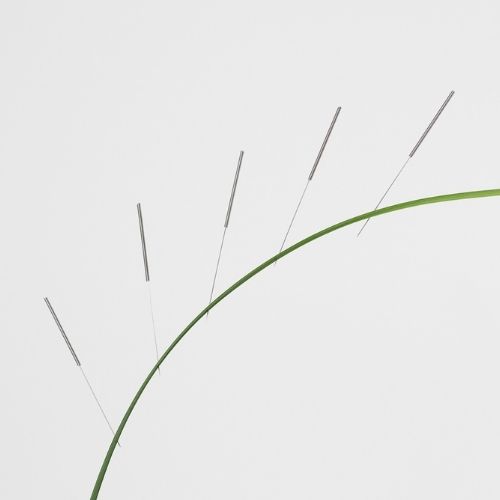
People who search for acupuncture for weight loss are often surprised that sessions rarely focus on the scale. Sessions are built around your pattern and are used to support digestion, regulate the stress response, improve sleep, and ease the symptoms that make consistency difficult. Point selection changes as the pattern changes.
2. Chinese Herbal Medicine
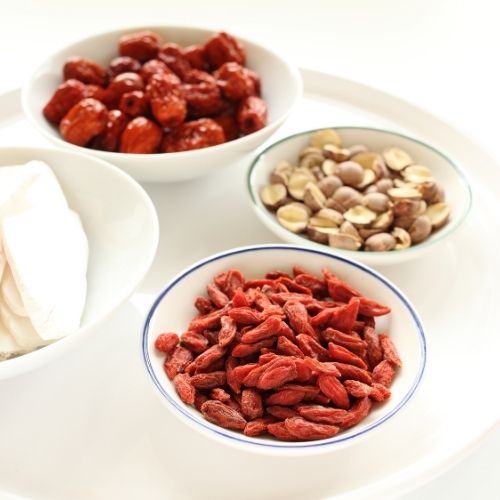
Formulas are prescribed to match the diagnosed pattern and adjusted over time. They must be taken under the supervision of a licensed herbalist who knows your full medication list, since interactions are possible. Nothing should be self prescribed.
3. Where Nutrition Fits Into Chinese Medicine for Weight Loss
Guidance is tailored to the pattern rather than generic, and it works alongside digestive and gut health support rather than replacing the medical, sleep, and nutritional foundations that any sustainable change depends on.
Chinese Medicine for Weight Loss: Honest Evidence and Expectations
Acupuncture and herbal medicine are supportive care. They do not cure metabolic conditions and they are not a weight loss treatment in the pharmaceutical sense.
Evidence for acupuncture is strongest in chronic pain and nausea. For metabolic and weight related outcomes the research is smaller, of mixed quality, and generally shows modest effects, most often when combined with dietary and lifestyle change rather than used alone. Anyone promising rapid or guaranteed results is not describing this medicine accurately.
Results are gradual and highly individual. The first changes patients usually report are better digestion, steadier energy, improved sleep, and fewer stress driven cravings. Changes in body composition, where they occur, tend to follow those improvements over months rather than weeks.
One further note. If your relationship with food or your body has become distressing, or if eating has become restrictive, that deserves support from a physician or a qualified mental health professional before any of this is a useful conversation.
Starting the Conversation at Sage Wellness
Chinese medicine for weight loss is worth exploring if you are curious about why your body is behaving the way it is, rather than looking for a shortcut. Care at Sage Wellness in the Financial District begins with a full intake, a pattern diagnosis, and a plan that works alongside your medical team. Book the complimentary fifteen minute phone consultation to discuss whether Chinese medicine for weight loss suits your situation and what pattern may be driving your picture. If you found us while searching for acupuncture for weight loss near me or acupuncture to lose weight near me, that call is a good place to find out what realistic support looks like for you.
Reviewed by Deb Valentin, M.S., L.Ac., founder of Sage Wellness and a licensed acupuncturist and Chinese herbalist.