









Does microneedling work for acne scars? Research suggests it can soften indented acne scars, especially shallow rolling and boxcar scars, though results vary and build slowly over a series of sessions.
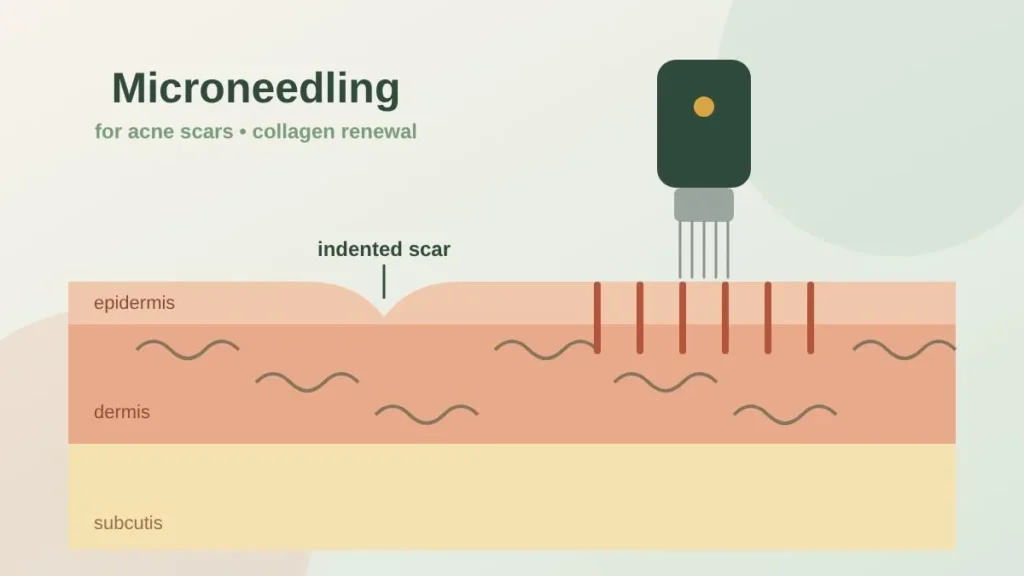
Microneedling for acne scars uses a pen with very fine needles to create tiny, controlled channels in the skin, and the skin responds by building new collagen.
This guide covers which scar types respond best, how microneedling rebuilds collagen, how many sessions you need, what downtime looks like, and how it combines with facial acupuncture.
Which Acne Scars Respond Best to Microneedling?
Shallow, indented scars such as rolling and boxcar scars respond best. Acne scars fall into a few common shapes, and the shape affects how well they respond. Ice pick scars are narrow and deep, like a small hole. Boxcar scars are wider with sharp edges. Rolling scars create a wavy, uneven surface because bands of tissue pull the skin down.
Microneedling for scars works best on shallow, indented scars such as mild boxcar and rolling scars. The American Academy of Dermatology (AAD) notes that ice pick and rolling scars need different treatments, so a dermatologist often combines approaches. Deep ice pick scars usually need more than microneedling alone.
Flat red or brown marks left after a pimple are not true scars. They often fade on their own or respond to other treatments, because microneedling targets texture rather than pigment.
Timing matters too. Scar treatment typically starts once acne is under control, so active acne is treated first, before scar work begins. Our guide to acupuncture for acne explains how breakouts are calmed from the inside.
How Does Microneedling Rebuild Collagen?
The needles create thousands of microchannels in the skin. Each one is a tiny, controlled injury that the body repairs by laying down new collagen and elastin, a process often called collagen induction. According to the AAD, this prompts the body to make new collagen and elastin, which helps diminish scars.
Microneedling is generally considered safe, though bruising, infection and scarring are possible, so check with a provider first if you have active acne or tend to form keloids.
Does microneedling work for acne scars? Research suggests it can improve the look of indented scars, but results vary between people, and many studies are small.
In combination treatments, a meta-analysis found that adding platelet-rich plasma to microneedling gave better results than microneedling alone, and the AAD notes that pairing it with radiofrequency or PRP can lead to less visible scarring.
Microneedling is not the only option. A 2026 meta-analysis of eight randomized trials comparing fractional CO2 laser with radiofrequency microneedling found that laser tended to improve scars more but with more pain, longer redness and a higher risk of dark marks.
When people compare microneedling vs laser for acne scars, the trade-off is usually stronger results against more downtime.
Cleveland Clinic notes that microneedling does not carry the same risk of skin discoloration as some procedures that use heat, light or lasers, which is why it is often considered for darker skin tones. Radiofrequency microneedling adds heat, so ask which type is being used.
How Many Sessions Do You Need?
There is no single answer to how many microneedling sessions for acne scars are needed. One meta-analysis of microneedling trials found that the included studies used two to six sessions. Most plans involve a series of sessions, often spaced several weeks apart so the skin can heal and rebuild between treatments.
Your plan depends on your scar type, scar depth, skin type and goals. Mild, shallow scars often respond sooner, while deeper scars may need more sessions or a combined approach. A good provider will examine your skin, explain what microneedling for acne scars can realistically achieve for you, and reassess after each treatment.
Dramatic photos are common in microneedling acne scars marketing. Treat microneedling before and after acne scars images with caution, since lighting, angle and editing can exaggerate changes. Ask to see a provider’s own unedited photos, and remember that individual results differ.
Does Microneedling Hurt, and How Long Is the Downtime?
Most people feel only pressure or mild stinging, and redness usually fades within a few days. A session usually starts with cleansing and a numbing cream. The provider then glides a pen with fine needles across the skin in sections. Most people describe pressure, tingling or mild stinging.
Expect redness right afterward, similar to a mild sunburn, along with tightness or slight swelling. Downtime is usually short for most people, and the redness often fades within a few days, though your skin type and the needle depth matter.
Plan treatment away from big events. Treated skin can also feel dry or flaky for several days as it renews, so keep it moisturized and let flakes shed on their own.
Simple microneedling aftercare tips:
- Follow your provider’s instructions first, since they know your skin.
- Use a gentle cleanser and a fragrance-free moisturizer.
- Apply broad-spectrum sunscreen daily and avoid direct sun.
- Skip harsh actives, such as retinoids and exfoliating acids, until your provider says they are safe.
- Do not pick, scrub or rub treated skin.
Can You Combine Microneedling With Facial Acupuncture?
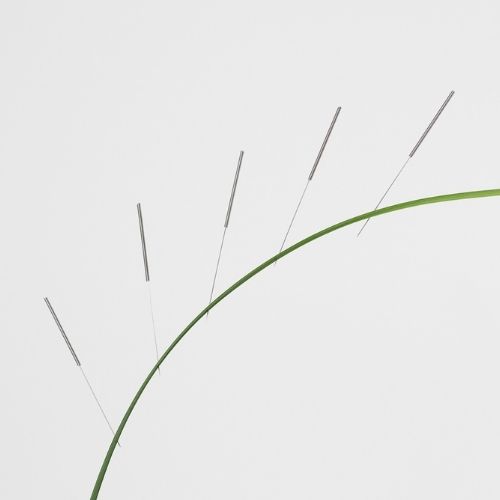
Yes. Some patients combine microneedling with facial acupuncture to support circulation and skin vitality between treatments. Facial acupuncture uses fine needles on the face and selected body points, and it is also used for tone and texture. Our guide to cosmetic acupuncture explains how the approach works.
At Sage Wellness, both are offered under one roof, so a plan can bring the two together. See the microneedling in NYC page for details on how these treatments are offered together.
Combining treatments does not guarantee a result, and microneedling is not done over active inflammation. Your practitioner will decide the sequence based on your skin and goals.
Does Microneedling Help Fine Lines and Sagging Skin?
Yes, modestly. The same collagen response is why microneedling is also used beyond scars. Microneedling for fine lines and microneedling for sagging skin are also common goals, along with rough texture and enlarged-looking pores. The evidence is modest, and changes are usually subtle and build slowly.
If fine lines are a bigger concern than scars, read our guide to acupuncture for wrinkles. It explains a gentler, needle-based approach to the skin.
Expect improvement in smoothness and tone, not a dramatic lift. A candid consultation will help you set realistic goals.
Microneedling in Our NYC Clinic
If you are researching microneedling for acne scars NYC clinics provide, Sage Wellness offers professional microneedling at 139 Fulton Street in the Financial District. We use a professional microneedling pen fitted with fine needles to create controlled microchannels and support the skin’s natural renewal. For a service overview, see best microneedling NYC.
Before treatment, tell your provider about your acne history, including any acne medication you use or have used recently, and any skin conditions, blood thinners or pregnancy. Those details help decide whether microneedling is right for you.
Read more about microneedling in NYC at our clinic. You can also book a complimentary 15-minute phone call to ask questions first.
Frequently Asked Questions
1. Does microneedling work for acne scars?
Research suggests it can improve the look of indented acne scars, although results vary and many studies are small. It tends to work best on shallow scars and may be combined with other treatments for deeper ones.
2. How many microneedling sessions do I need for acne scars?
There is no fixed number. Studies have used about two to six sessions, and your plan depends on your scar type, depth and skin response.
3. Does microneedling hurt?
Most people feel pressure or mild stinging, and a numbing cream is typically applied first. Discomfort varies with the area treated and the needle depth.
4. Can I do microneedling if I still have active acne?
Usually not. Scar treatment typically begins once breakouts are under control, since needling over active acne may spread bacteria and irritate the skin. Treat the acne first, then plan scar work.
5. How long until I see results?
Collagen builds slowly, so changes are gradual, often over weeks to months. Most people see more improvement after a series of sessions than after a single one, which is why microneedling for acne scars is planned as a course, not a one-off.
SAGE WELLNESS · FINANCIAL DISTRICT, NYC
Ready for smoother skin?
Book a free 15-minute call with Deb Valentin, L.Ac, and find out if microneedling in NYC is right for you.