


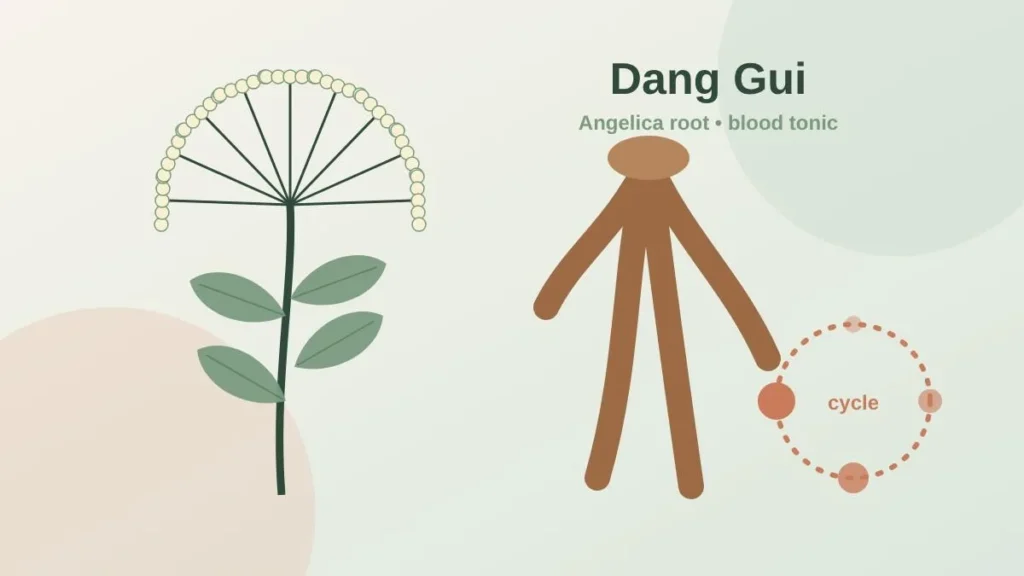
What is dang gui used for? In Chinese medicine, dang gui is a blood tonic used mainly for the menstrual cycle, including cramps, light or irregular periods and perimenopause symptoms.
It is the same herb sold in the West as dong quai, the root of Angelica sinensis. Modern research on dang gui benefits is limited, and the herb carries real cautions, especially in pregnancy and with blood thinners.
This guide explains how dang gui is used, what the evidence says, how it fits into Chinese herbal formulas, and who should avoid taking it.
What Is Dang Gui (Angelica Root)?
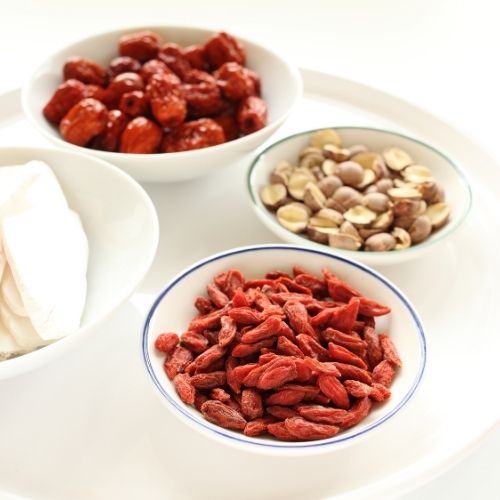
Dang gui is the root of Angelica sinensis, a fragrant plant grown in China and used in Chinese medicine for many centuries. Like many common Chinese herbs, it is dried and sliced, then simmered into a tea or ground into granules, capsules and tinctures.
Dang gui benefits and angelica root benefits are usually described in terms of periods, energy and menopause. Memorial Sloan Kettering Cancer Center (MSK) lists premenstrual symptoms, menstrual cramps and menopausal symptoms among its popular uses, and notes that most other uses have not been tested.
Not every angelica is dang gui. European angelica (Angelica archangelica) and bai zhi (Angelica dahurica) are different herbs with different uses, so check the Latin name on a label.
What Does Dang Gui Do in Chinese Medicine?
In Chinese medicine, dang gui is a blood tonic. It is described as both nourishing and moving the blood, which is why it appears so often in formulas for women. Practitioners reach for it when the pattern points to “blood deficiency,” a traditional picture that can include pale skin, dizziness, dry hair, scanty periods and fatigue.
Blood deficiency in Chinese medicine is not the same as anemia, which is a blood test finding. The two can overlap, but you cannot tell one from the other by symptoms alone. If you are often tired, lightheaded or have heavy periods, ask your doctor to check your iron levels as well.
Traditionally, dang gui is blended with herbs that support digestion, so the body can make use of the nourishing herbs.
Can Dang Gui Help Period Cramps?
It is traditionally used for cramps, but the evidence is modest. The menstrual cycle is where dang gui is most commonly used. It is traditionally added to formulas for cramps, irregular cycles and periods that are light or delayed. Dong quai for menstrual cramps is a common traditional use.
The research is modest. Some small trials of formulas that include dang gui have looked at menstrual pain, but the studies are limited in size and quality, so the herb cannot be called a proven treatment. Persistent cramps deserve a medical check, because they can have causes that need treatment.
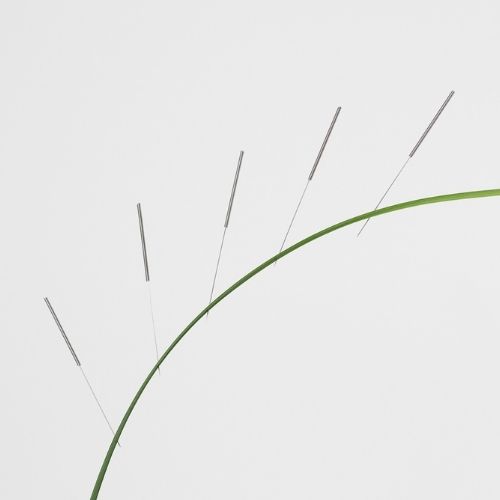
Herbs are often combined with acupuncture. Our guide to acupuncture for period pain explains how needling is used for cramps.
Your practitioner will ask about the timing of your cramps, your flow, clots and cycle length, because dang gui is chosen only when the pattern fits. Heat packs, gentle movement and regular sleep can ease cramps alongside any herbal plan.
Our women’s health acupuncture NYC page describes the wider approach.
Does Dang Gui Help Fertility or Perimenopause?
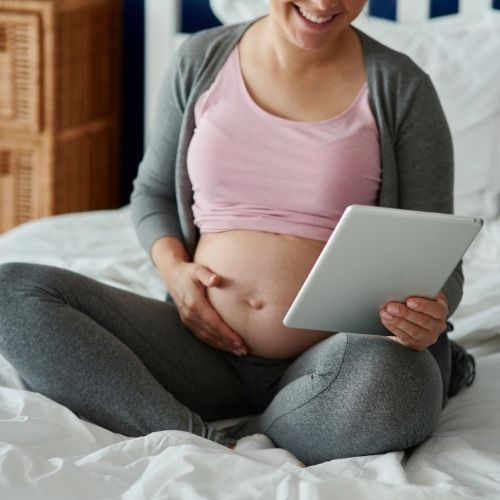
Dang gui for fertility is a common search, but the evidence is thin. No reliable study has shown that dang gui improves the chance of conception, and MSK advises avoiding dang gui during pregnancy because it may raise the risk of miscarriage. Anyone trying to conceive should discuss timing with a licensed herbalist and a doctor.
Rather than relying on one herb, a practitioner looks at your whole cycle, including sleep, stress and nutrition. Our article on Chinese herbs for fertility covers how herbs are used across the cycle.
In perimenopause, dang gui is used in formulas for hot flashes and mood changes. Dong quai for menopause is another common use, and MSK calls the evidence for menopausal symptoms inconclusive. A trial in men on androgen deprivation therapy found it did not help hot flashes.
If hot flashes are your main concern, our guide to treating hot flashes with Chinese herbal medicine explains how practitioners build formulas for them. If you are in perimenopause, our page on acupuncture for menopause in NYC explains how acupuncture and herbs are combined.
How Is Dang Gui Used in Formulas?
Dang gui is almost always used within a formula. The classic example is Si Wu Tang, the “Four Substance Decoction,” which combines dang gui with white peony, rehmannia and ligusticum to nourish the blood. It is a foundation for many women’s formulas, with other herbs added to match the pattern.
Because formulas are adjusted to each person, the herbs and amounts differ from one patient to the next. In traditional practice, different parts of the root, known as the head, body and tail, are chosen for different effects, which is another reason professional guidance matters.
Dang gui tea, granules and capsules are all available, but products vary in strength and quality. Our Chinese herbal medicine NYC consultations begin with a review of your health history, symptoms and goals before a formula is recommended.
Dang gui is often paired with astragalus to support both qi and blood. Avoid taking it as a supplement on your own without checking it against your medications and health history. Bring every supplement to your visit and ask for the botanical name and form on your formula.
Is Dang Gui Safe? Who Should Avoid It
Dong quai side effects can include bloating, loss of appetite, diarrhea and sun sensitivity. Is dong quai safe? The answer depends on your health, your medications and the product. Be cautious or avoid dang gui in these situations:
- Pregnancy caution. MSK advises avoiding it if you are pregnant or breastfeeding.
- Blood thinners caution. Dang gui may increase the risk of bleeding with warfarin and other blood thinners, so talk with your clinician first.
- Heavy periods. Because dang gui is traditionally used to move the blood, it may not suit heavy menstrual bleeding.
- Hormone-sensitive conditions. The herb showed estrogen-like activity in lab studies, so people with hormone-sensitive cancers should consult their physician first.
- Surgery. Tell your surgeon about any herbs you take. Herbs that may affect bleeding are commonly stopped before an operation, so ask your surgical team for instructions.
- Sun sensitivity. MSK lists photosensitivity as a side effect, so use sunscreen and cover up outdoors.
Always tell your doctor and your herbalist about every medication and supplement you take, and report any unusual bleeding, rash or sun reaction right away.
Frequently Asked Questions
1. What is dang gui used for?
In Chinese medicine, dang gui is used as a blood tonic, mainly for menstrual concerns such as cramps and irregular cycles. Modern research on its benefits is limited.
2. Is dong quai the same as dang gui?
Yes. Dong quai is the common Western name for dang gui, the root of Angelica sinensis. Product strength and quality vary, so ask your herbalist about the source.
3. Can dang gui help period cramps?
It is traditionally used in formulas for period cramps, and some small studies have looked at it. The evidence is not strong enough to call it a proven treatment, and persistent pain should be checked by a doctor.
4. Is dang gui safe during pregnancy?
No. MSK advises avoiding dang gui during pregnancy because it may raise the risk of miscarriage. Tell your practitioner right away if you are pregnant or trying to conceive.
5. Can I take dang gui with blood thinners?
Not without medical advice. Dang gui may increase the risk of bleeding with warfarin and other blood thinners, so check with your clinician before using it.
SAGE WELLNESS · FINANCIAL DISTRICT, NYC
Wondering which herbs fit you?
Book a free 15-minute call with Deb Valentin, L.Ac, and find out if Chinese herbal medicine in NYC is right for you.